.jpg)
Divide the day into Daoli and Daowai
Start with Sophia and Central Street in Daoli, then treat Old Daowai as a separate part of the day instead of forcing an uninterrupted walk between every point. With half a day, stay in Daoli. Add Daowai when you have a full day and want to examine buildings closely. This route suits travellers interested in the city itself and can become shorter outdoor sections in winter. Keep major ice attractions on another day so that transport and competing themes do not repeatedly interrupt the walk.
Begin with Sophia’s exterior
At Sophia Square, compare the dome, brickwork and proportions from places where visitors may stop, then continue towards Central Street. An official provincial account of Harbin’s streets provides background to these city landmarks, but cannot establish an indoor performance or interior opening on your visit date. Check current use, admission and any event separately if entering matters. Exterior observation remains a worthwhile stop if access is unavailable; there is no need to fill the difference with an unrelated shopping visit.
Follow Central Street towards the river
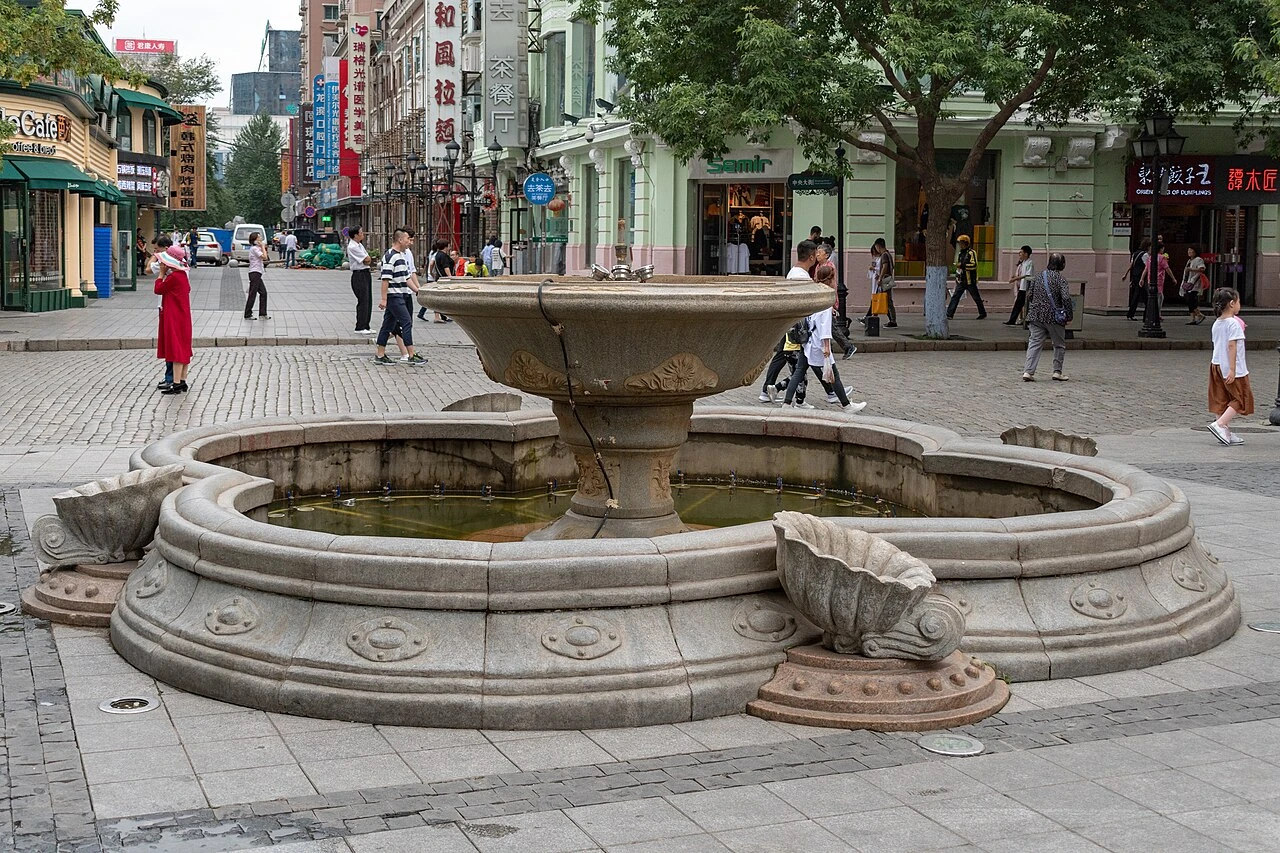
The provincial foreign-affairs travel material describes Central Street running from Jingwei Street in the south to the riverside Flood Control Monument in the north. Enter the southern portion and walk north in stages to avoid retracing the same streets. Choose three or four facades and inspect window curves, doorway decoration, corners and the relationship between floors. You do not need architectural vocabulary to notice differences. Describe what you see first, and avoid calling every older building Russian by default.
Make a seated meal part of the route
Choose a restaurant or café where the group actually wants to sit instead of trying to sample every famous shop while standing. In winter, break outdoor observation into short sections; in warmer months, adjust to sun and rain as well. Continue to the river only if everyone wishes. Reaching the monument does not require adding a boat or ice activity. Explain food requirements and desired meal pacing beforehand. A comfortable lunch can preserve the attention needed for details in the afternoon.
Look for a different building pattern in Old Daowai
Transfer separately to the Chinese Baroque district and explore around Jingyu Street and the open lanes. The provincial tourism department’s architectural explanation describes the relationship between street facades, Chinese courtyards and shops with living space behind. Examine window heads, gates and passages with that relationship in mind. Enter only areas clearly open to visitors; residential space and repair works are not automatic extensions of the tour. Comparing a few details thoughtfully is more rewarding than rapidly photographing every building number.
Agree on an ending before setting out
Identify the lunch area in Daoli, the cross-district transfer and the return meeting point in Daowai. Save a recognisable meeting location in each district. If rain or fatigue changes the day, finishing after Daoli is a coherent shorter version. Do not let a promise to see everything turn the afternoon into transit. For a guided visit, specify architectural history and language needs; for photography assistance, agree on time at each stop. Distinguish observing an exterior from having visited a building’s interior.
Questions before you go
What should I remove with only half a day?
Keep Sophia and Central Street; leave Old Daowai for another dedicated outing.
Can I enter every historic building?
No. Follow current admission signs and respect residential areas and restoration works.
Explore a tailored Harbin journey. Share your dates, arrival details and preferred pace to refine your visit.